Franz Kafka's 'Metaphormosis': A Mind-Bending Journey Through Symbolism and Transformation
Written by Camile Santana
August 10th
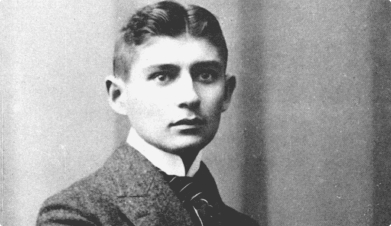
"Metamorphosis" is a remarkable literary work written by Franz Kafka, a Czech author of the 20th century. Published in 1915, this novella stands as an emblematic example of Kafka's literary style often associated with expressionism and absurd fiction. The narrative revolves around Gregor Samsa, a traveling salesman who wakes up one morning to discover that he has transformed into a monstrous insect. While it might seem an odd tale at first glance, "Metamorphosis" delves far beyond that, delving into deep and universal themes.
Kafka is renowned for his ability to create strange and oppressive worlds, and "Metamorphosis" is no exception. Through this bizarre transformation, the author symbolically explores human alienation. Gregor's metamorphosis is more than a physical change; it signifies his disconnection from society and his own family. He becomes a stranger in his own home, unable to effectively communicate with others. This alienation is a central theme resonating throughout the narrative.
Another prominent theme is that of social conformity. Gregor's family initially tries to conceal his transformation, but as his condition worsens, they display impatience and a desire to restore normalcy. This emphasis on normality and conformity can become suffocating, reflecting societal expectations that often restrict individuals.
Moreover, bureaucracy and dehumanization are also intertwined within the narrative. Gregor's work as a traveling salesman is portrayed as an inhumane system where he's treated as a mere cog in an impersonal bureaucratic machine. This depiction resonates with the reality of the industrialized work environment of the time and echoes contemporary concerns about alienation in the workplace.
Ineffective communication is also a vital element in the story. Gregor struggles to communicate with his family in his insect form, and his family struggles to understand his actions and needs. This lack of effective communication reflects the universal difficulty people have in understanding and connecting with one another, highlighting the loneliness and inherent frustration in the human condition.
In summary, Franz Kafka's "Metamorphosis" transcends its surreal and unsettling premise to explore deep and universal themes such as alienation, social conformity, dehumanization, and ineffective communication. Through Gregor's transformation and the complex interactions among characters, Kafka invites readers to reflect on the nature of identity, human relationships, and societal pressures on individuals. The work remains an influential literary exploration of the complexities of the human condition.
usion, "Turtles All the Way Down" transcends traditional categories of mystery and romance. By exploring Aza's journey through the lenses of mental health, friendship, and self-discovery, the book invites readers to reflect on the importance of understanding, supporting, and accepting others in their individual struggles.984" is a scathing critique of totalitarian regimes, information manipulation, loss of privacy, and the erosion of individual freedoms. The work has often been cited as a warning about the dangers of power abuse and the importance of constant vigilance to preserve freedom. The book is as relevant today as it was during its time of publication, continuing to inspire discussions about politics, state control, and the limits of freedom.Meet the Author
Franz Kafka, born on July 3, 1883, in Prague, in what is now the Czech Republic, was one of the most influential writers of the 20th century. His work is characterized by a unique blend of surrealism, existentialism, and absurd fiction, which delve into the complexities of the human condition in an often irrational and oppressive world. His personal life, works, and worldview have left a lasting impact on literature and cultural thought.
Kafka grew up in a German-speaking Jewish family in Prague, which was part of the Austro-Hungarian Empire at the time. He studied law at the university, but his true interest always lay in literature and writing. During his life, Kafka mainly worked at an insurance company, which influenced his views on bureaucracy and alienation—frequent themes in his works.
One distinctive feature of Kafka's works is the sense of alienation, powerlessness, and anguish his characters face in a hostile and incomprehensible world. His stories often feature protagonists trapped in absurd and inescapable systems, grappling with incomprehensibility and alienation from both themselves and others.
Kafka produced some of his most famous works, such as "The Metamorphosis," "The Trial," and "The Castle," during a relatively short period of literary activity. Despite this, his writing left a profound impact on Western literature, influencing authors like Albert Camus, Jean-Paul Sartre, and Gabriel García Márquez.
Following his premature death from tuberculosis on June 3, 1924, most of his writings were posthumously published by his friend Max Brod, playing a pivotal role in preserving and disseminating his work. Kafka's recognition grew significantly in the decades that followed, and he is now regarded as one of the great exponents of 20th-century literature, whose work continues to intrigue, challenge, and inspire readers and scholars worldwide. His unique approach to exploring the complexities of human existence ensures his legacy remains vibrant and relevant to this day.