Literary Revolution in Flames: The Disturbing Relevance of "Fahrenheit 451"
Written by Camile Santana
August 8th
Published in 1953, Ray Bradbury's "Fahrenheit 451" is a masterpiece that stands out in the dystopian genre, exploring complex themes such as censorship, freedom of expression, and social alienation. Through the journey of the protagonist, Guy Montag, the narrative offers a thought-provoking critique of modern society and its troubling tendencies.
Set in a historical context marked by the Cold War and paranoia surrounding the spread of subversive ideas, the book echoes the concerns of its time. The 1950s saw the rise of the Red Scare and an atmosphere of suspicion toward critical thinking and freedom of expression.
At the heart of the story are memorable characters. Guy Montag, initially a firefighter tasked with burning forbidden books, undergoes an internal transformation as he questions the hidden knowledge within those banned pages. The influence of his young neighbor, Clarisse McClellan, sparks a desire to understand the world beyond the superficial narratives of the media. Meanwhile, Captain Beatty, Montag's chief, personifies the authority that suppresses knowledge in favor of conformity.
The novel addresses complex themes interwoven with each other. Censorship and knowledge control emerge as a central aspect of the dystopian society. Books are banned to prevent subversive ideas from spreading, illustrating the dangers of government controlling access to information. This dynamic reflects concerns about state censorship and manipulation of public opinion.
Emotional alienation and social isolation are also vividly portrayed. The emphasis on technology and lack of meaningful interactions result in an emotionally vacant and isolated population. Genuine human relationships are replaced by shallow pleasures, underscoring the importance of deep and authentic connections.
The role of literature as a vehicle for knowledge and critical thinking is another central theme. The burning of books symbolizes an attempt to suppress divergent ideas and underscores the importance of questioning, analyzing, and reflecting. Through this theme, Bradbury emphasizes the need for healthy critical thinking in a free society.
Stylistically, Bradbury employs poetic language and vivid imagery to create a dark and immersive atmosphere. His descriptive style allows readers to delve into the thoughts and emotions of characters, intensifying the emotional connection with the story.
In a modern world where debates over freedom of expression, misinformation, and alienation continue to resonate, "Fahrenheit 451" remains relevant. The work serves as a warning against the suppression of ideas and blind conformity, inspiring readers to value freedom of expression, promote critical thinking, and keep the flame of knowledge alive.
In conclusion, "Fahrenheit 451" transcends its dystopian fiction nature, becoming a call to action to preserve intellectual freedom and cultivate a society that values diverse ideas and the pursuit of deep knowledge.
Meet the Author
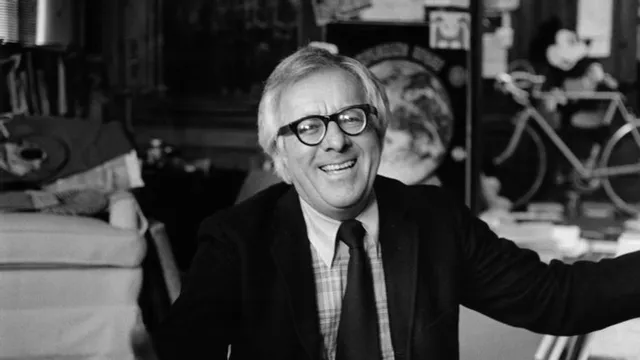
Ray Douglas Bradbury (1920-2012) was a renowned American writer known for his significant contributions in the genres of science fiction, fantasy, and horror. His most iconic work, "Fahrenheit 451," is just one of many creations that showcase his talent for exploring complex themes through imaginative and thought-provoking narratives.
Born in Waukegan, Illinois, Bradbury displayed a love for writing from a young age. His childhood was marked by fervent imagination and an early interest in horror and science fiction tales. His first published story, "Pendulum," appeared in the magazine "Super Science Stories" in 1941, marking the beginning of a successful literary career.
A distinctive feature of Bradbury's writing is his ability to blend elements of science fiction and fantasy with profound human themes. Unlike some science fiction authors of his time, he not only explored futuristic technologies but also examined their impact on society and people. This is evident in works like "The Martian Chronicles," a series of stories that explore the colonization of Mars as a mirror of earthly human issues.
With "Fahrenheit 451," Bradbury delved deep into a critique of censorship and information suppression, highlighting the importance of critical thinking and freedom of expression. The book also revealed Bradbury's ability to predict social trends, such as the growing influence of television and the impact of digital media, which are especially relevant today.
In addition to his esteemed literary career, Bradbury also left a significant legacy as a screenwriter. He worked on various television and film adaptations, including the screenplay for "Moby Dick" (1956) and contributions to the famous series "The Twilight Zone."
Ray Bradbury received numerous awards and honors throughout his life, including the Pulitzer Prize Special Citation for Fiction (2007) for his vital contribution to American literature. His influence extends beyond the pages of his books, inspiring generations of writers, readers, and science fiction enthusiasts to explore the unknown, question the established, and envision a broader future.
At his core, Ray Bradbury remains a timeless literary figure, whose work will continue to captivate and stimulate people's imagination as they explore the boundaries of knowledge and creativity.